Urban 2063
When research must become movement
When the African Centre for Cities needed to transform Urban2063 from academic initiative into Africa's defining knowledge platform on urban futures, they required more than publication design and social media management. They needed strategic communications that could bridge the gap between research rigour and public accessibility, transforming complex urban development discourse into compelling content that resonates across stakeholder groups from policymakers to practitioners, from academics to citizens.
The challenge: Make African urban futures research visible, accessible, and actionable across digital and print channels whilst maintaining academic credibility.
The brief
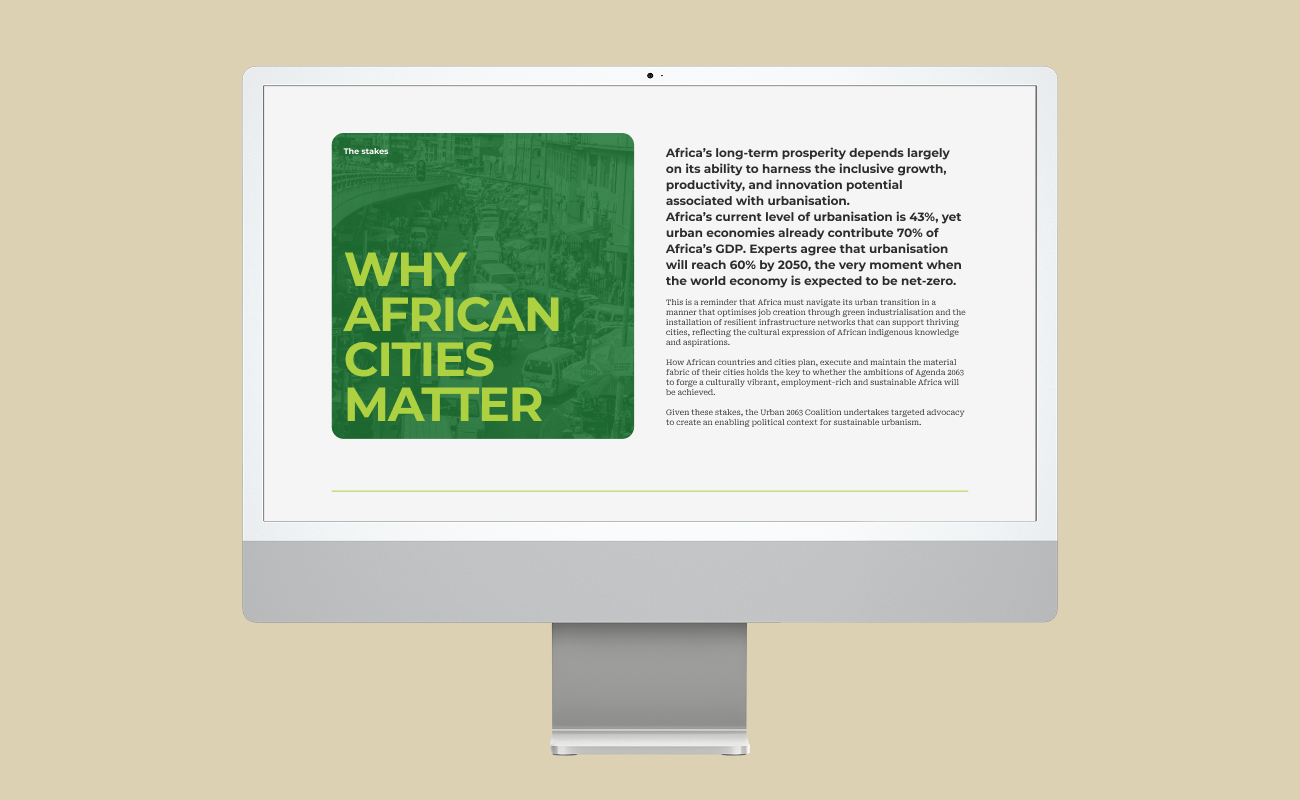
By 2050, Africa's urbanisation will reach 60% – the very moment when the world economy is expected to be net-zero. Africa must navigate its urban transition in a manner that optimises job creation through green industrialisation and resilient infrastructure, reflecting African indigenous knowledge and cultural expression.
The African Centre for Cities at UCT recognised that academic research alone wouldn’t drive this transformation. Urban2063 needed to function as a knowledge platform, a space where research findings, policy discussions, practitioner insights, and citizen voices converge around Africa's urban future.
The communications challenge was multifaceted: create a visual identity system for print publications that commands authority in academic and policy circles; build digital presence that engages beyond traditional research audiences; develop content strategies that translate complex urban development concepts into accessible social media narratives; and establish Urban2063 as the go-to platform for African urban futures discourse.
The underlying business challenge: in a crowded landscape of development initiatives and research projects, how do you position an academic platform as both intellectually rigorous and publicly relevant? How do you build audience across drastically different stakeholder groups: from ministers to mayors, from UN-Habitat to grassroots organisations?
Building a knowledge platform, not just producing content
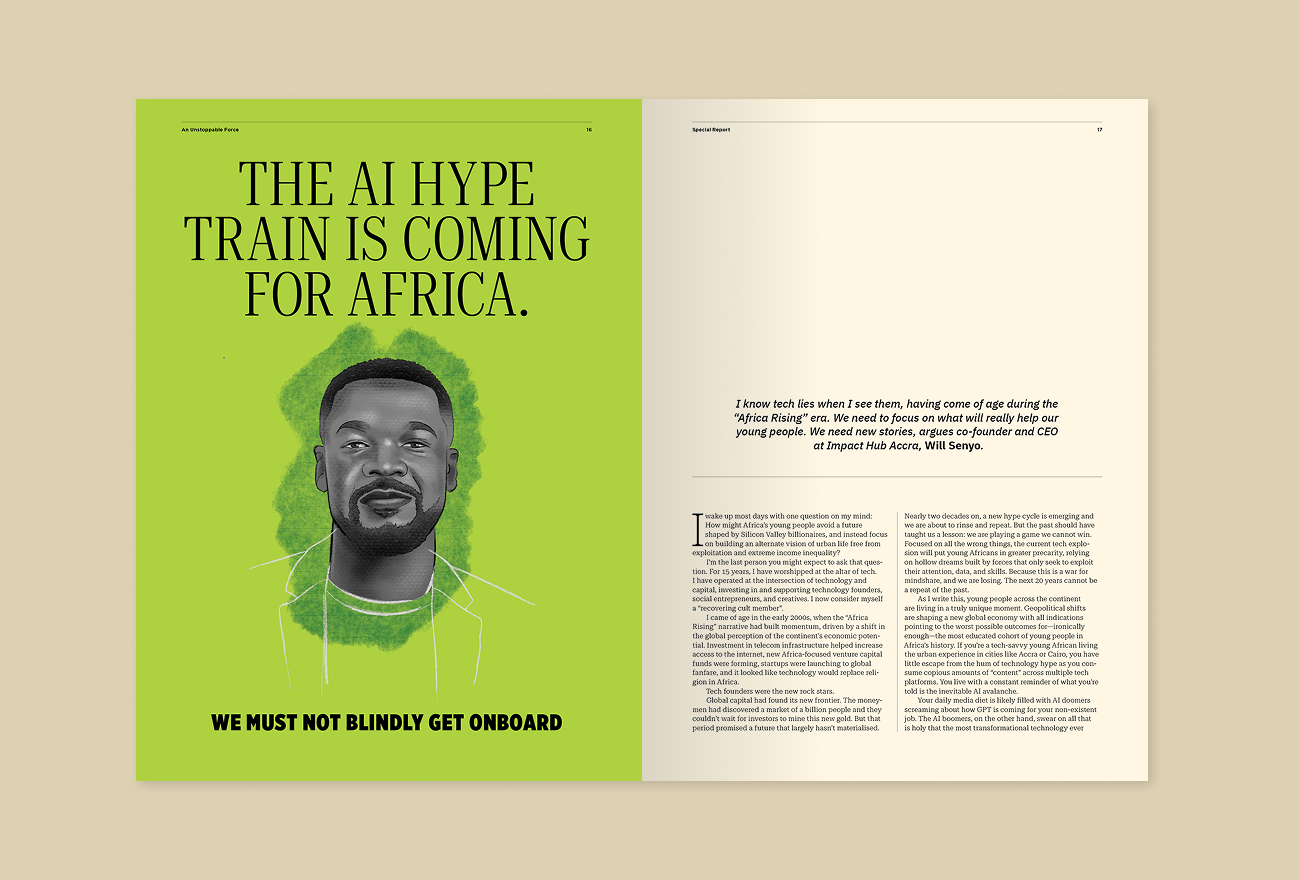
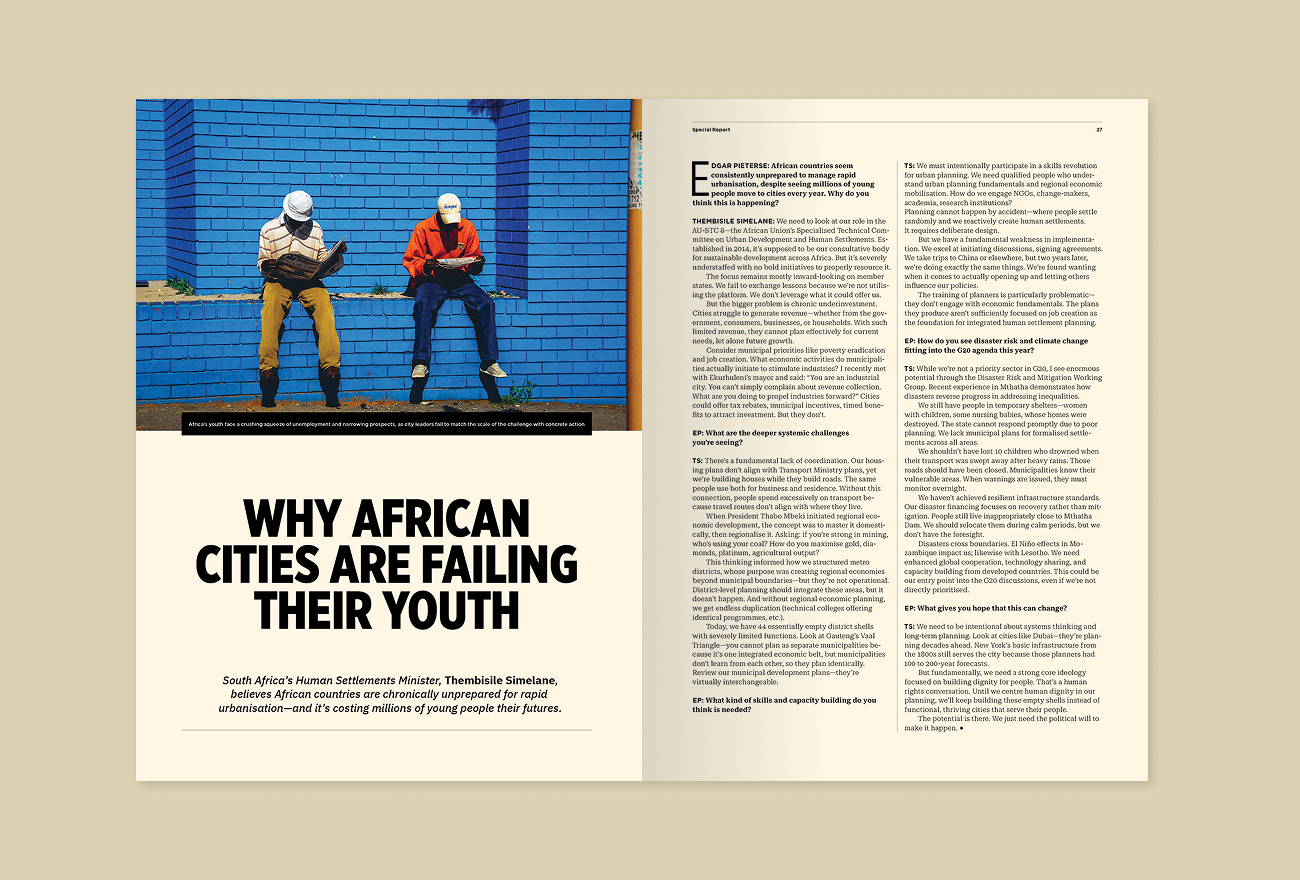
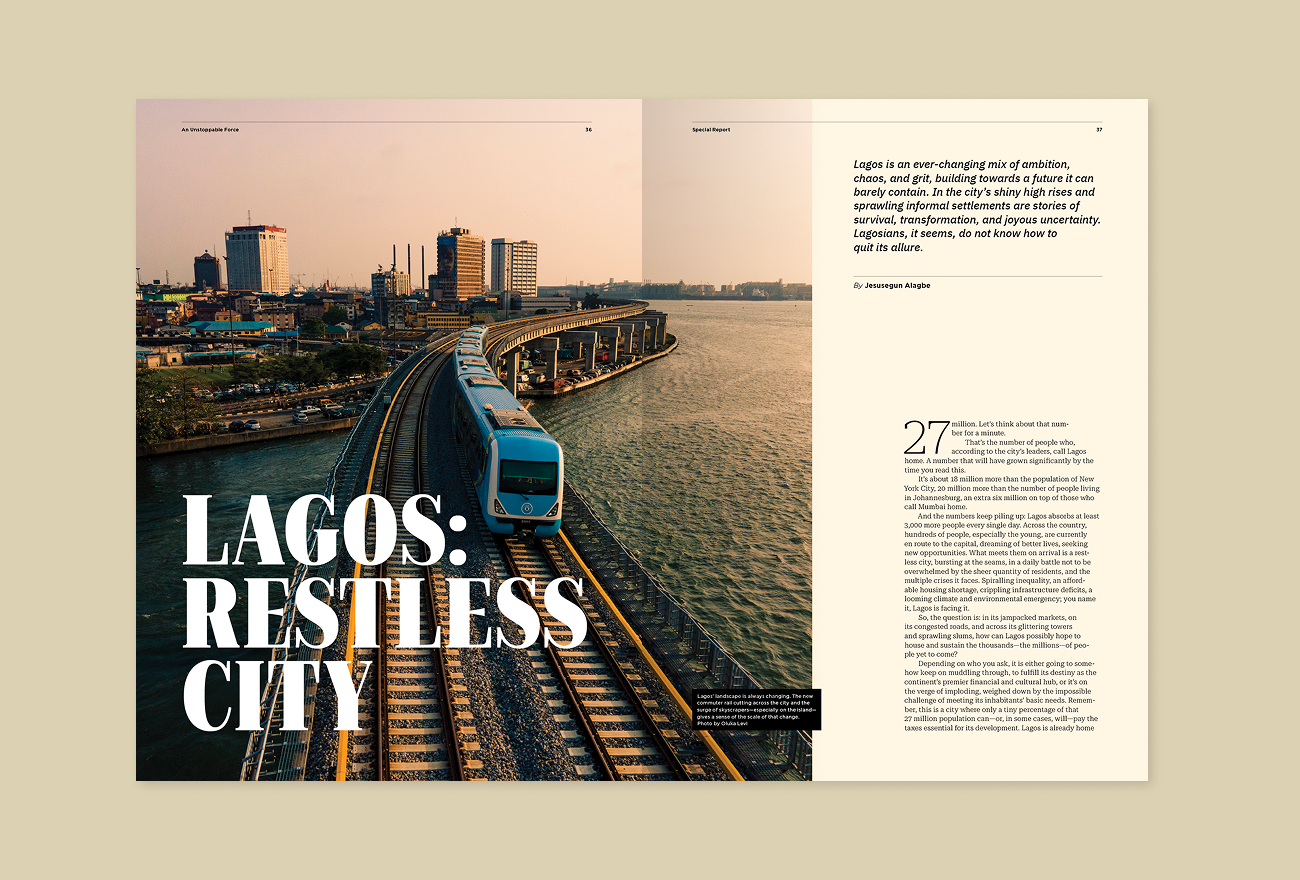
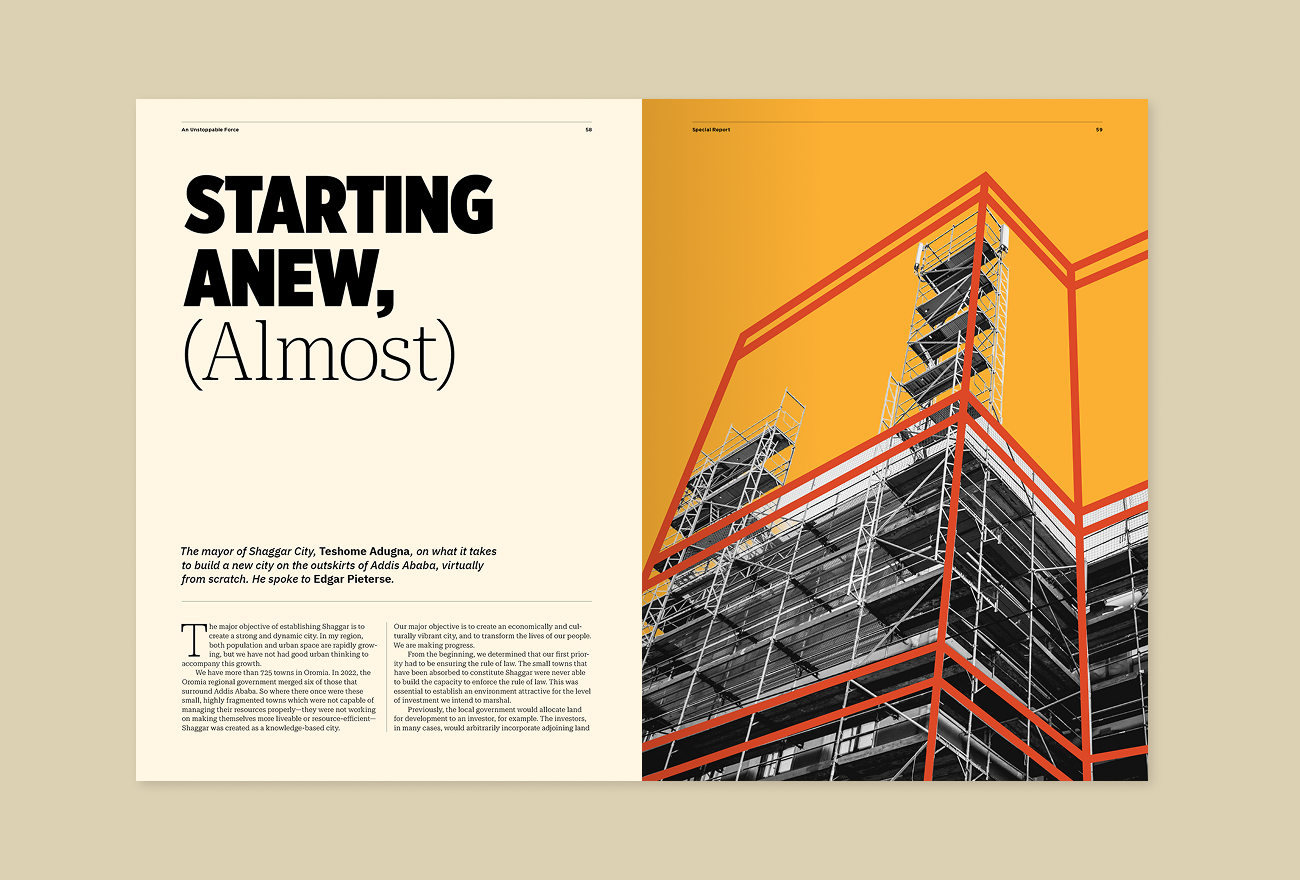
Print as authority artefact
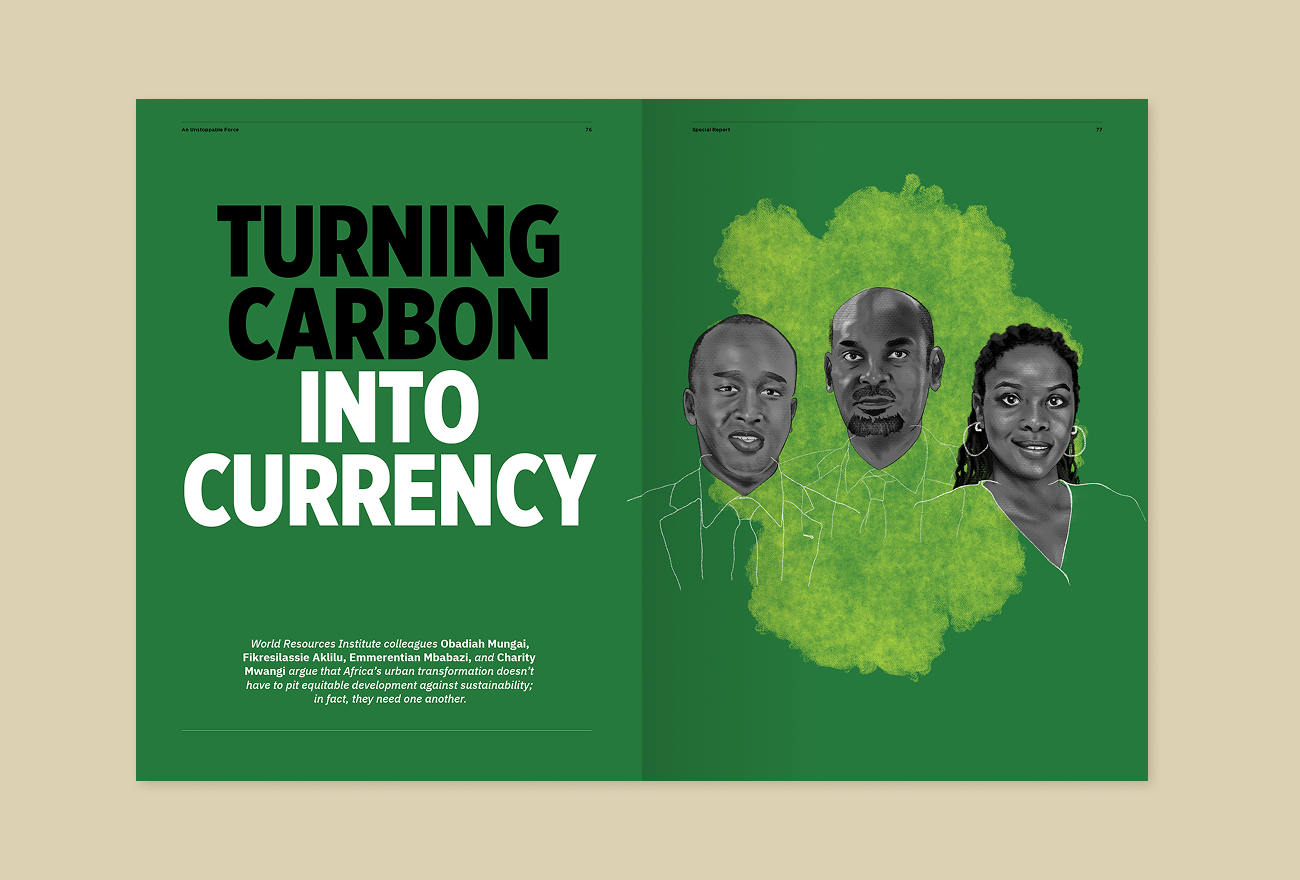
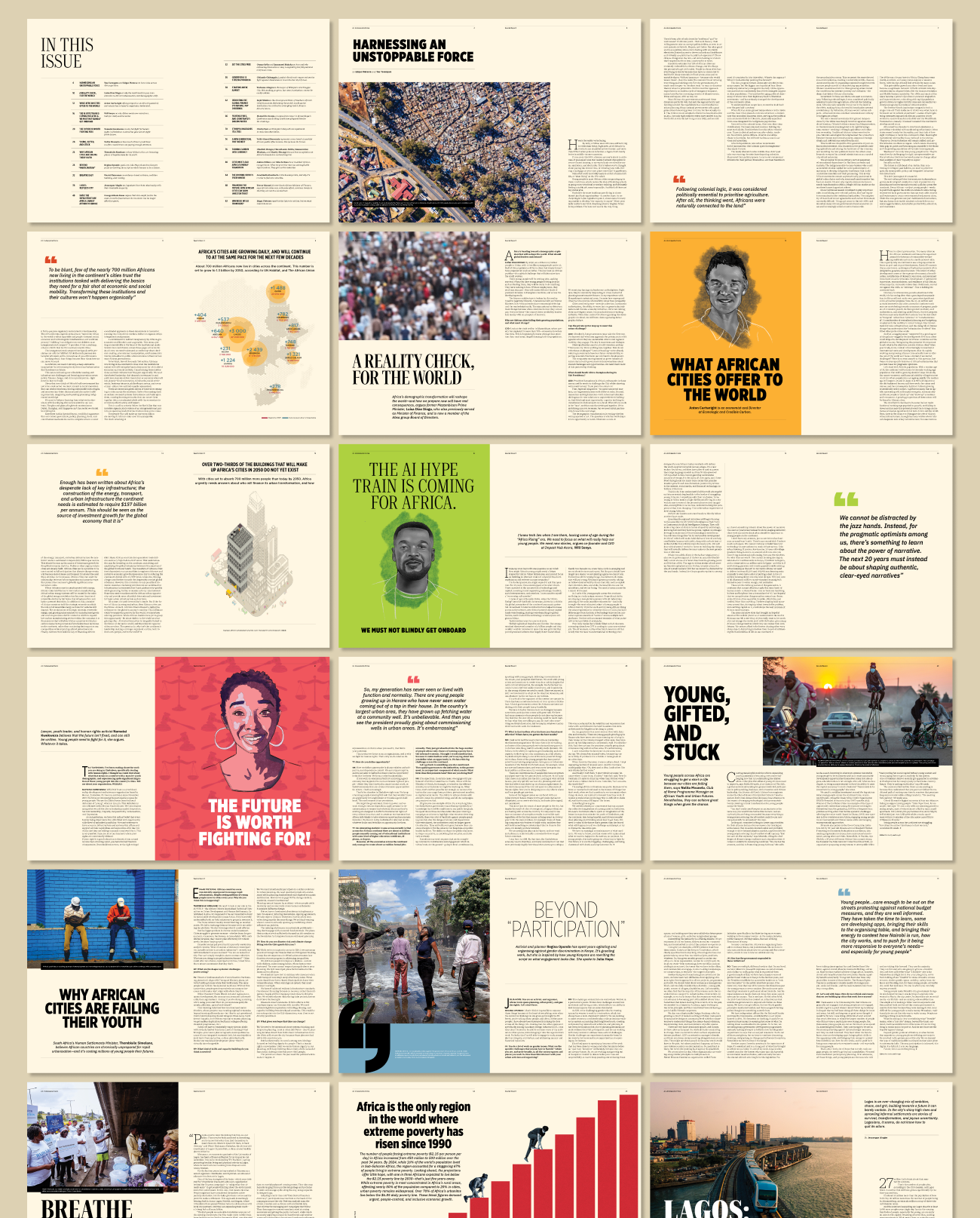
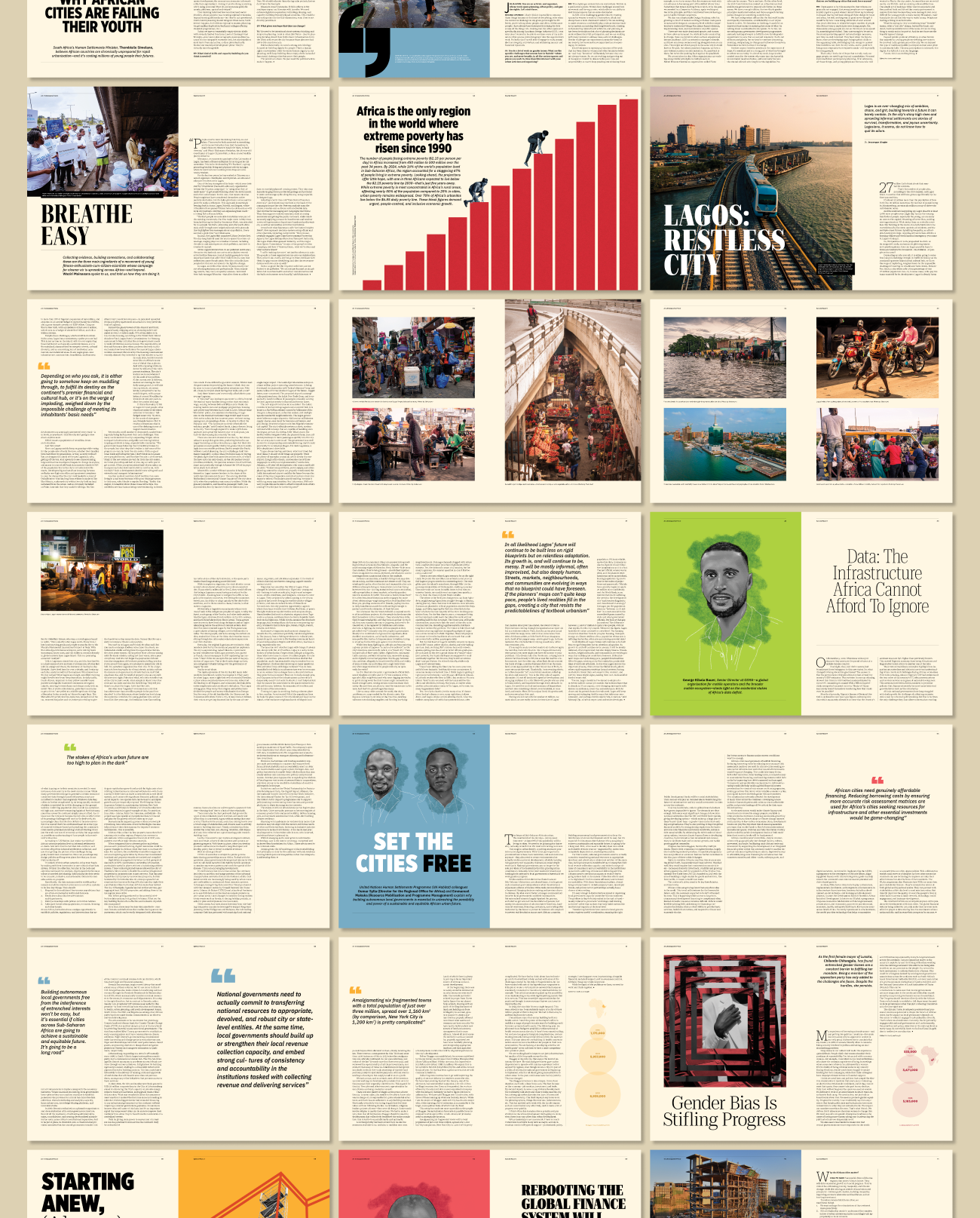
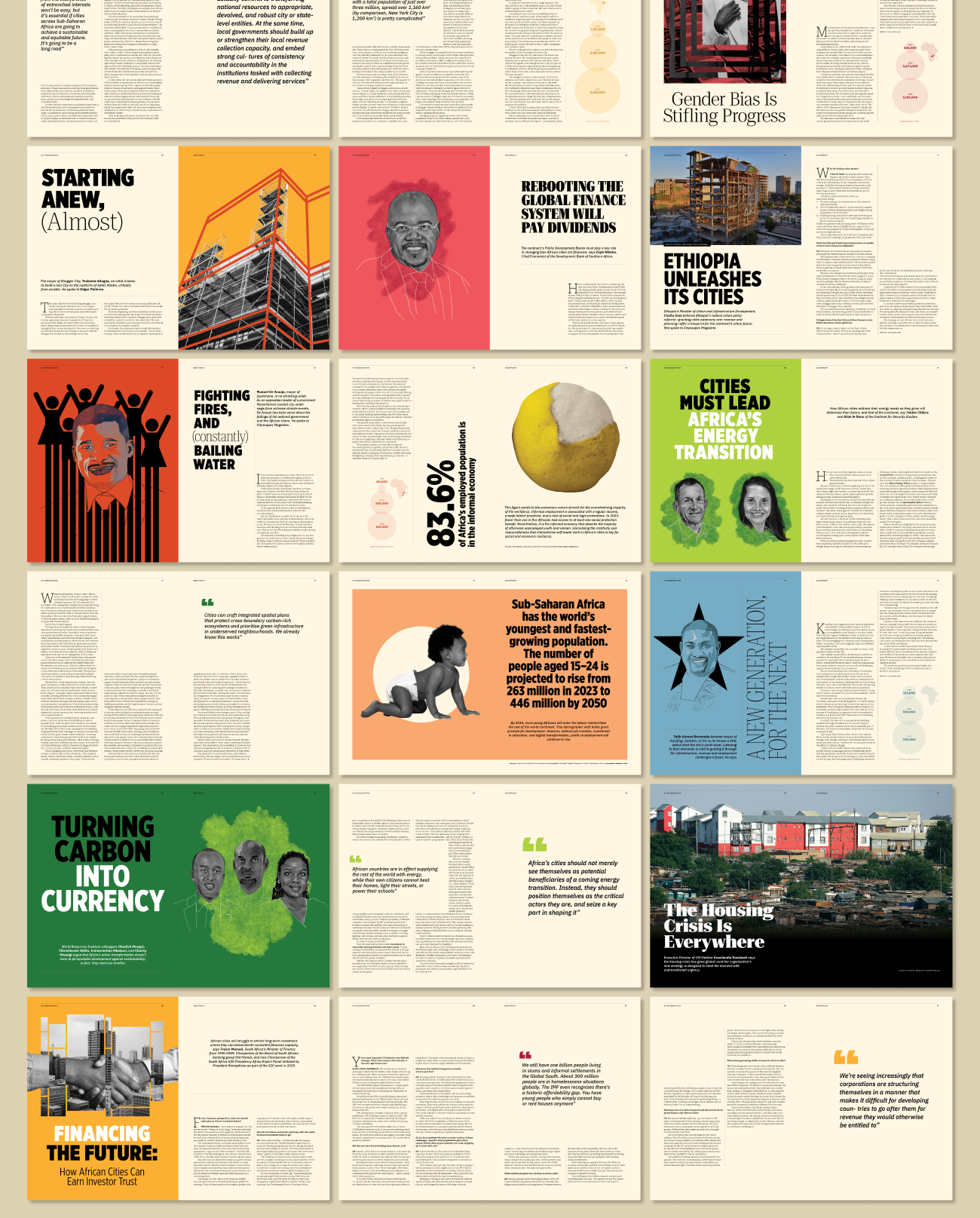
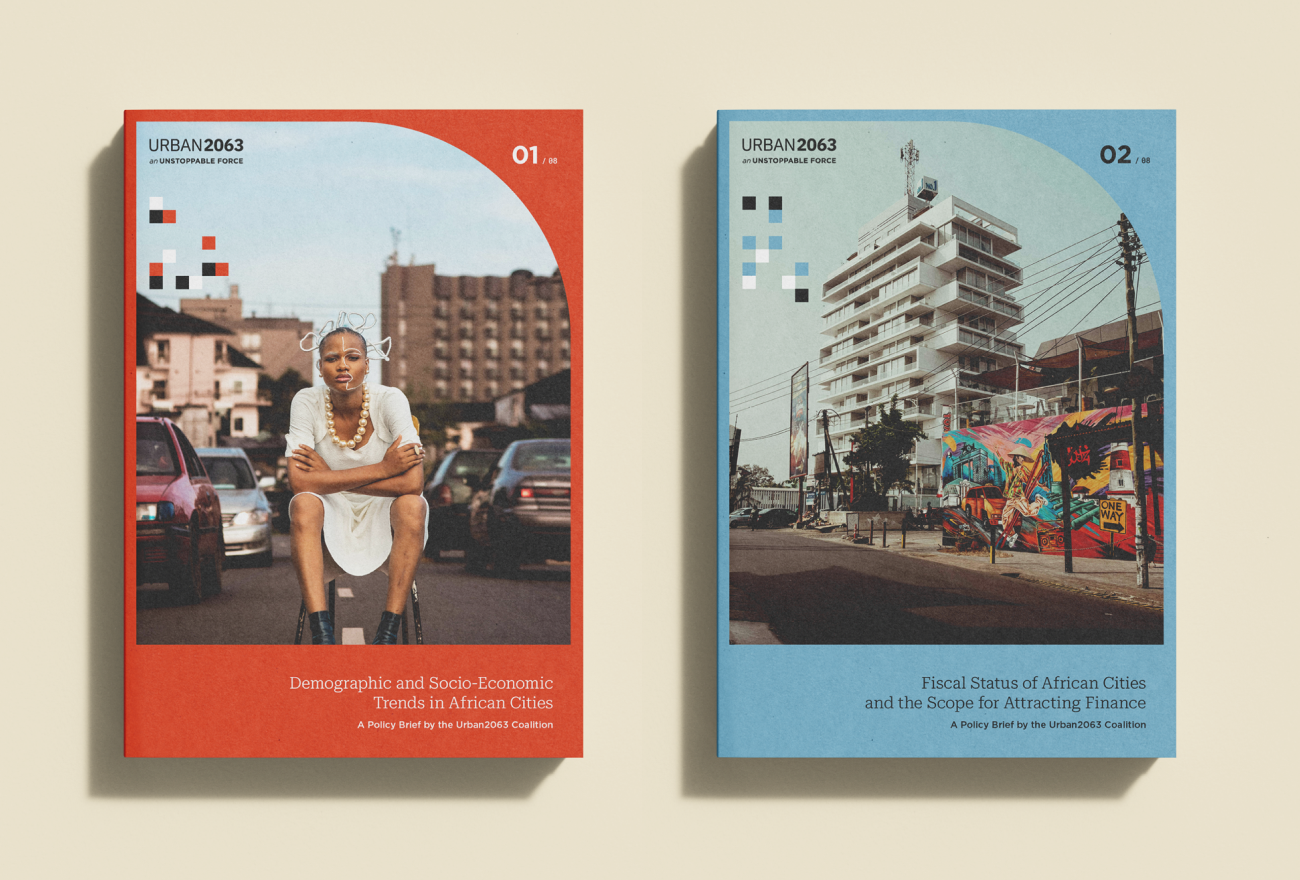
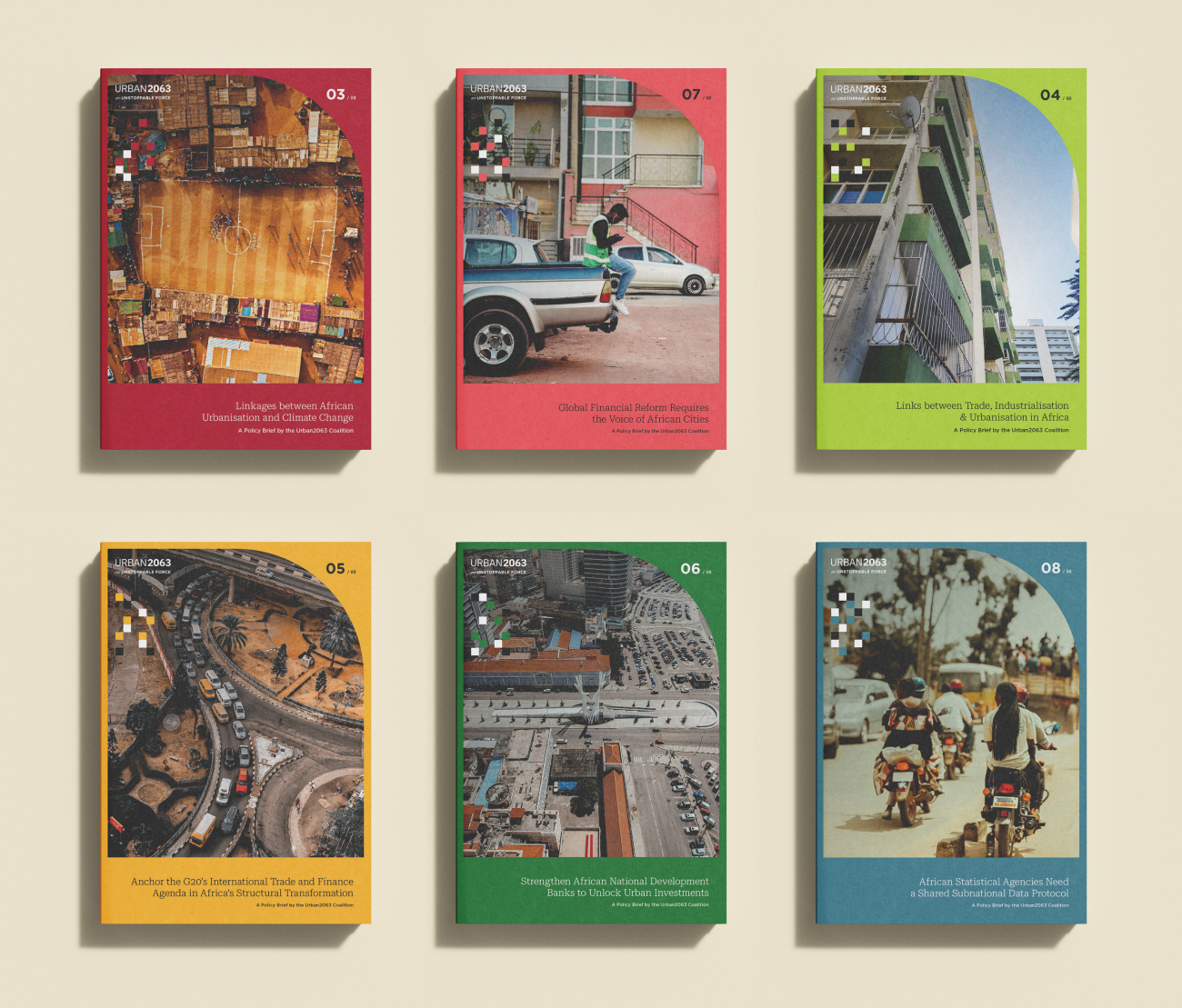
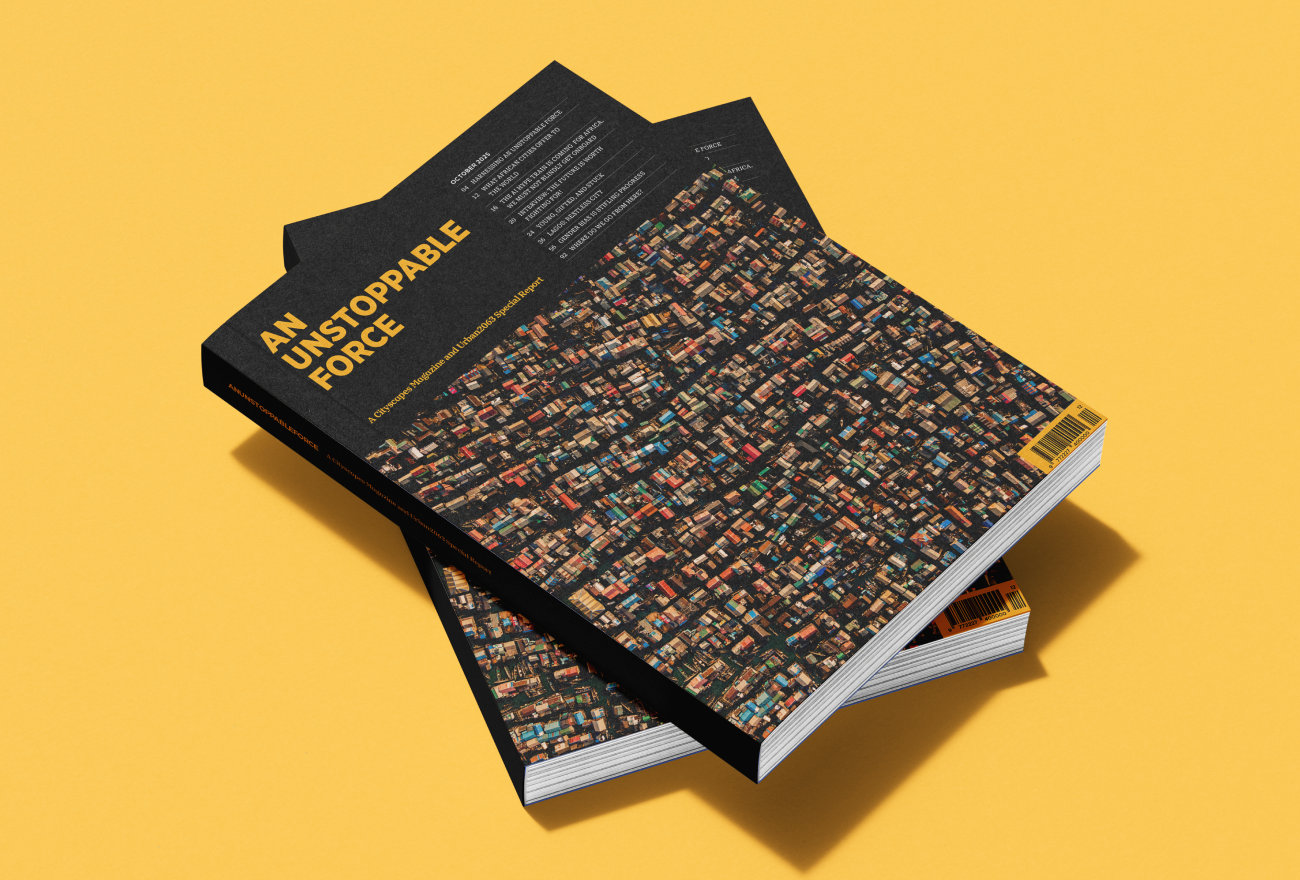
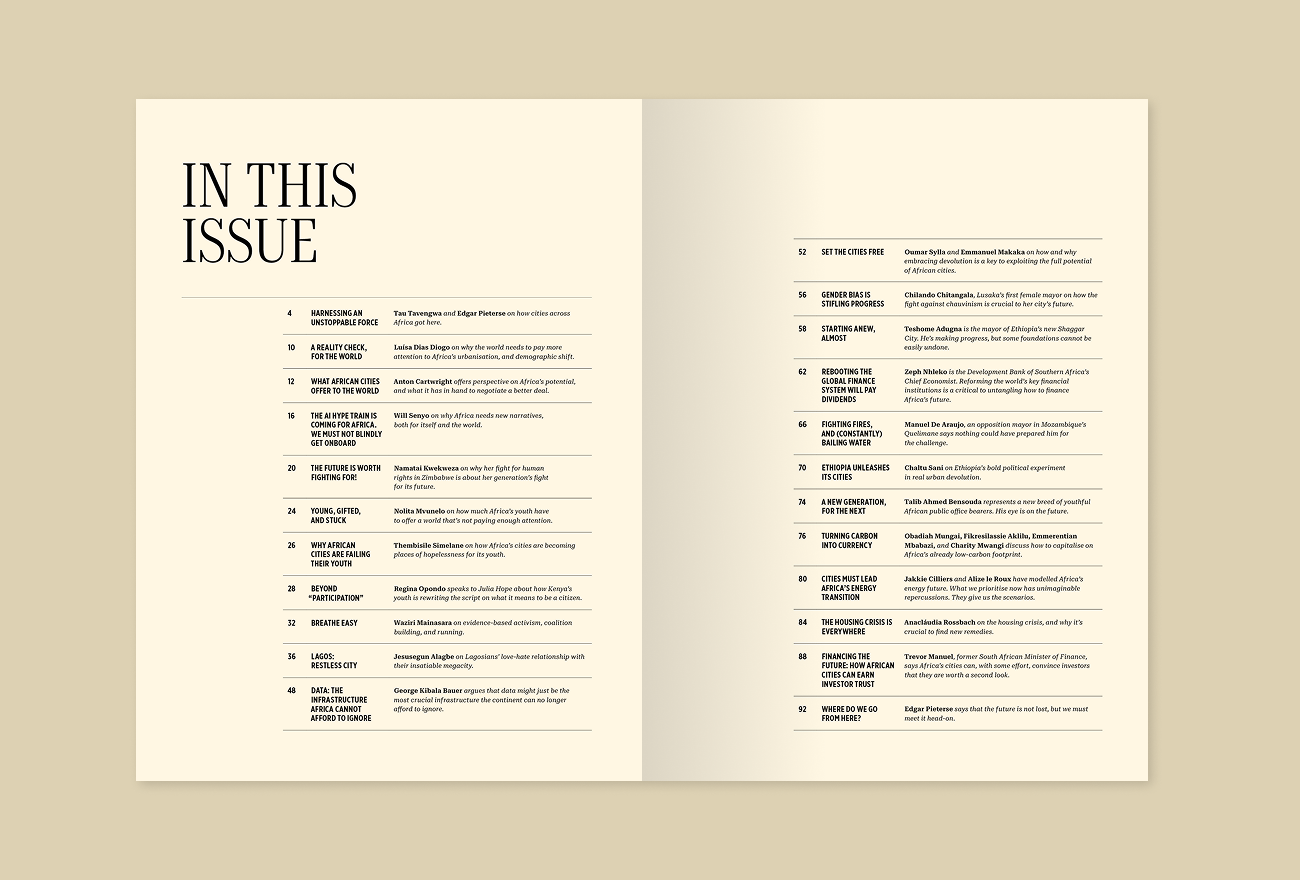
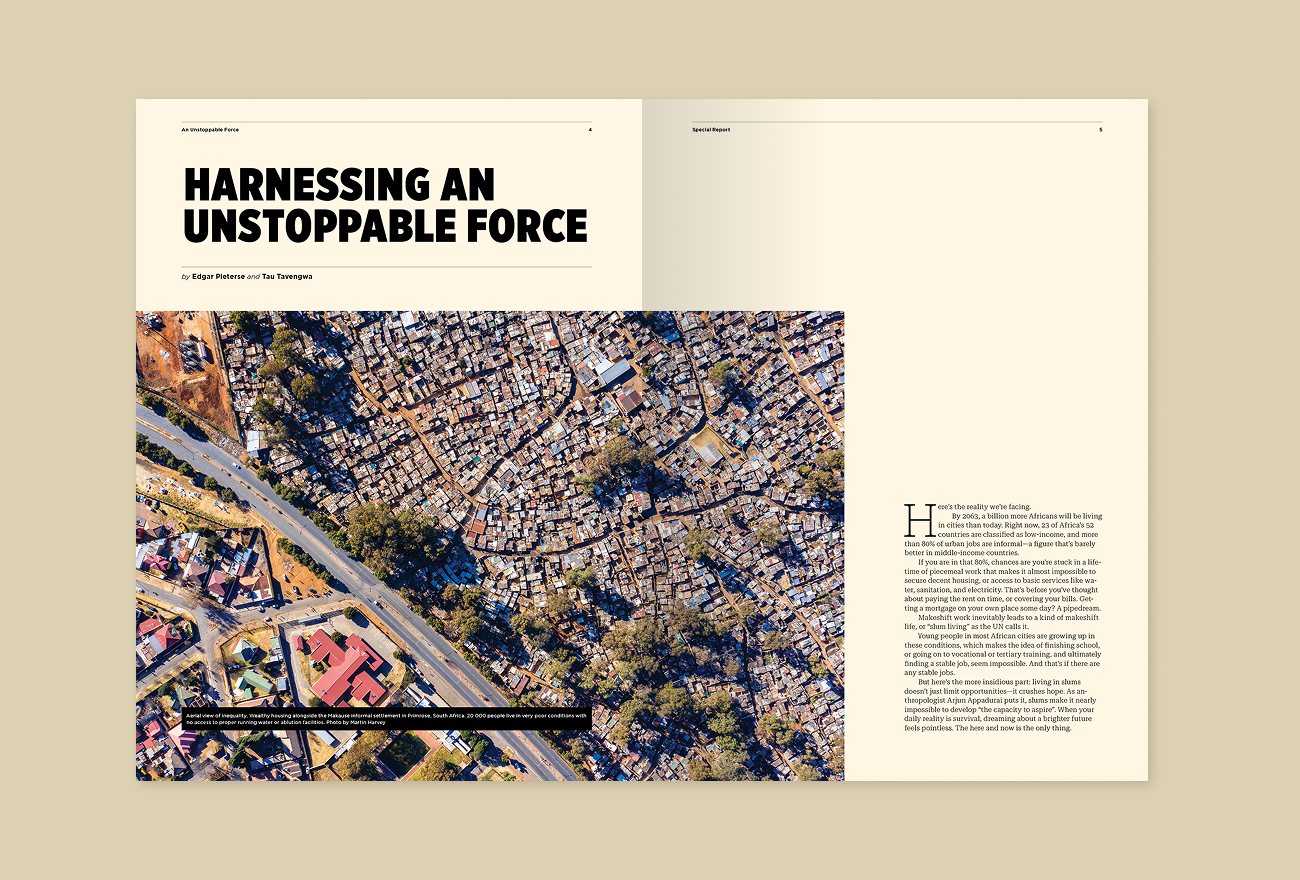
We approached the Urban2063 Special Report not as routine academic publication but as a definitive statement piece. The design system needed to balance scholarly credibility with contemporary accessibility: authoritative without being exclusionary, rigorous without being inaccessible. We developed templates that could accommodate complex data visualisations, infographics, and photography whilst maintaining consistent visual language that positions Urban2063 as Africa's premier voice on urban futures.
Digital presence as conversation platform
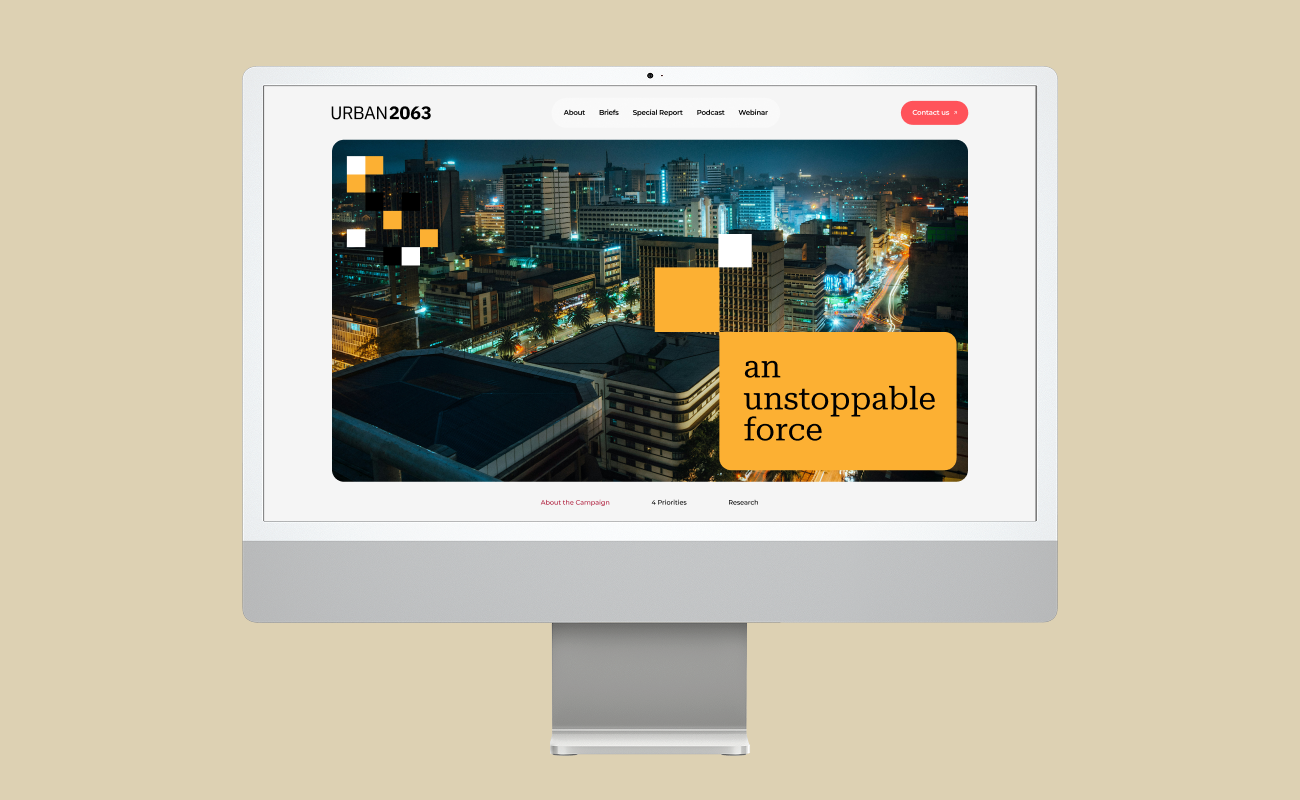
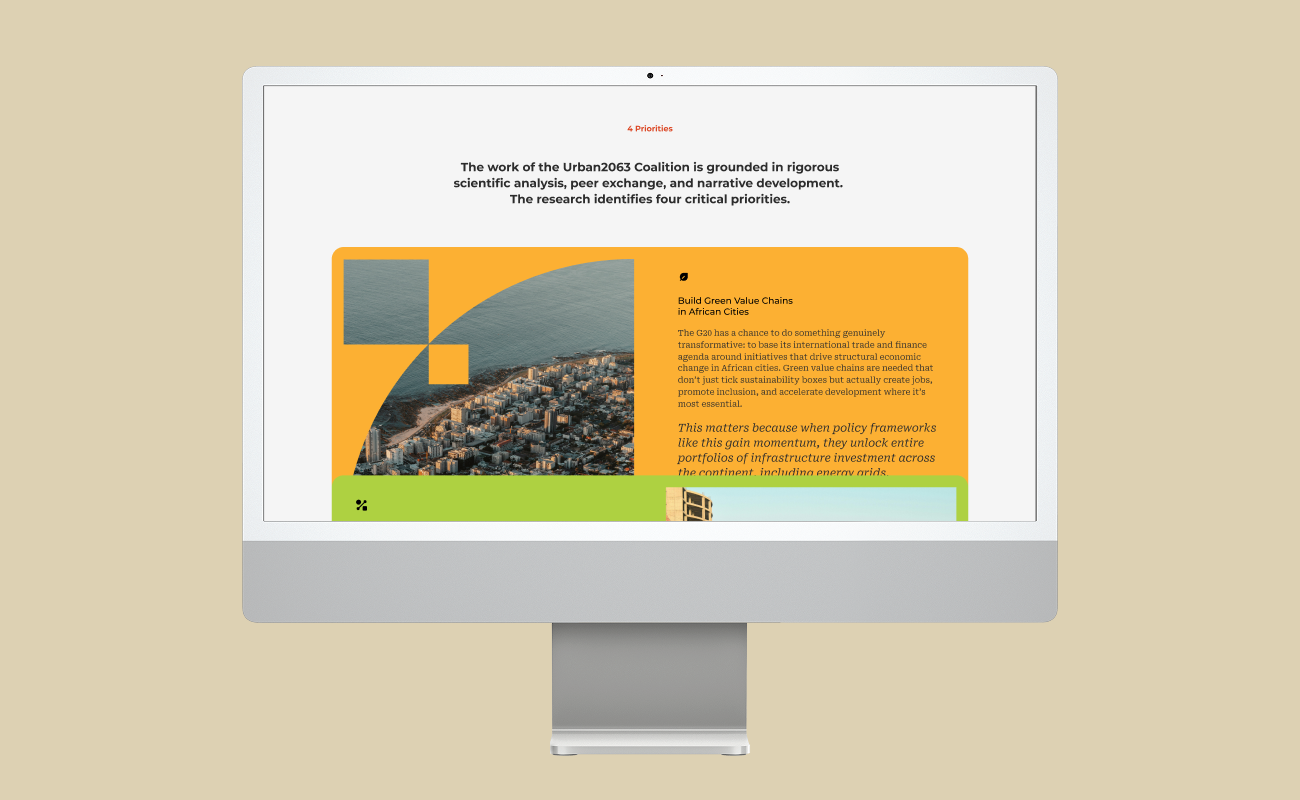
The Urban2063 website needed to function as more than content repository; it's the platform where diverse stakeholders engage with research, access resources, and participate in discourse. We developed web copy that reframes urbanisation not as inevitable challenge but as opportunity for innovation, green industrialisation, and cultural expression. The website architecture prioritises multiple entry points for different audiences: policymakers seeking evidence-based frameworks, researchers accessing publications, practitioners finding case studies, citizens understanding how urban development affects their lives.
Social media as knowledge translation
Over a number of months, we managed comprehensive social media content development across platforms. The strategy wasn't to simply post about research; it was to translate urban development discourse into narratives that resonate. Critical innovation: designing social media templates that maintain visual consistency whilst flexing across content types—from speaker line-ups to data infographics to publication quotes. Each template reinforced Urban2063's visual identity: contemporary, distinctly African, intellectually serious without being intimidating.